
Marrakech: The Intersectionality of Reflection and Experience
February 19, 2026
by Tory Schendel-Vyvoda, Cohort ‘23
Marrakech—where to begin? Although I only spent five days in the country, it is a place where linear time is irrelevant. It is where Heidegger’s concept of compressed time is experienced, as the past, present, and future form the fundamental structure of existence through one’s daily encounters, such as the city’s medieval architecture prominently featured in the medina, tea with the indigenous Berber people, (a term that is by now rather obsolete: people of Amazigh ethnicity or Imazighen is often preferred), and being subsumed by the fierce fire of female spirituality as women artists are uplifted and amplified in local galleries and museums. It is also a place that, despite the hustle of traffic and human and non-human activity, offers intentional green spaces for purposeful, silent reflection. It is a city that calls for and demonstrates authentic openness and human reciprocity, as the people in Marrakech are not only willing but also enthusiastic about sharing joy with complete strangers.
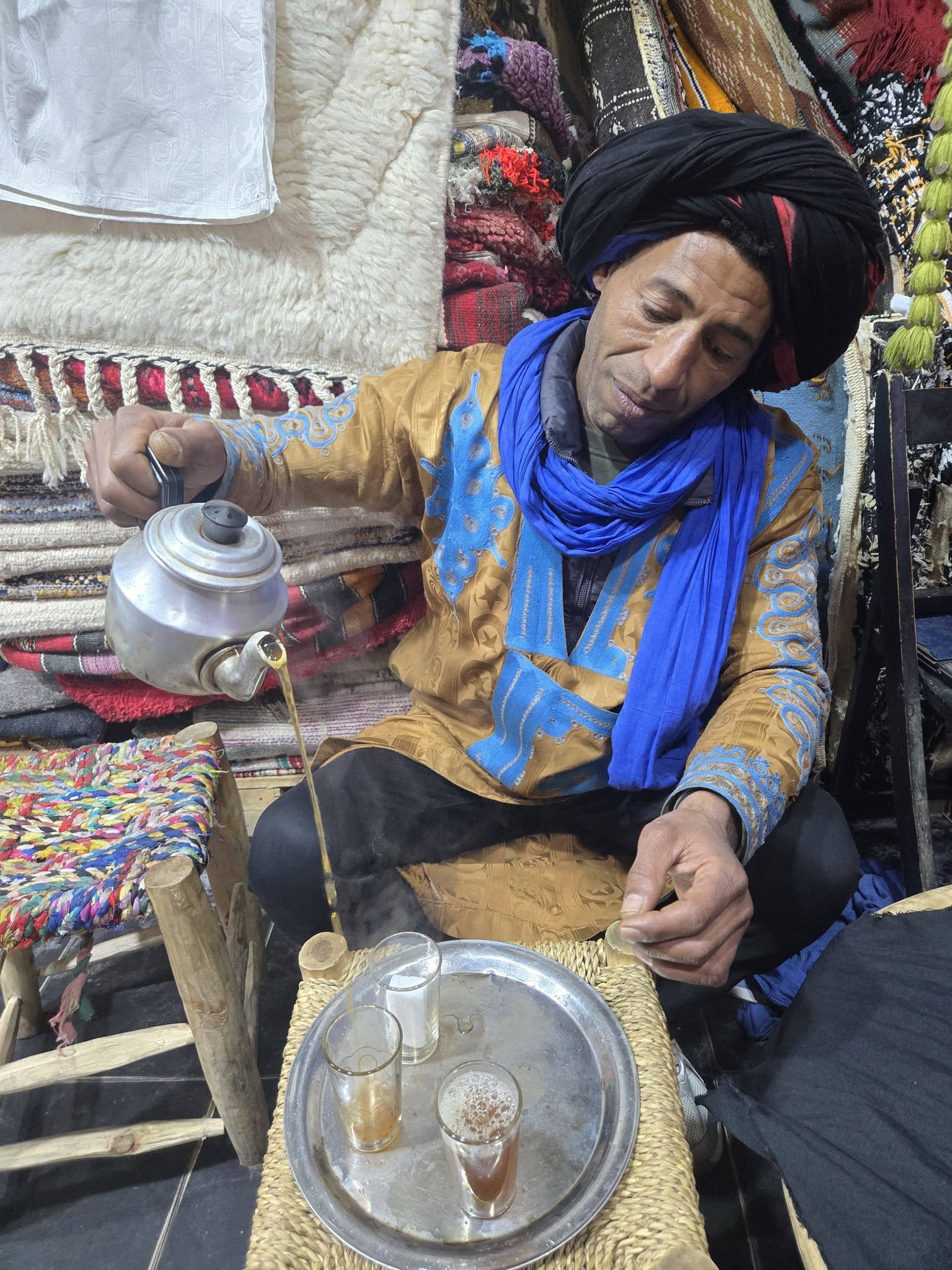
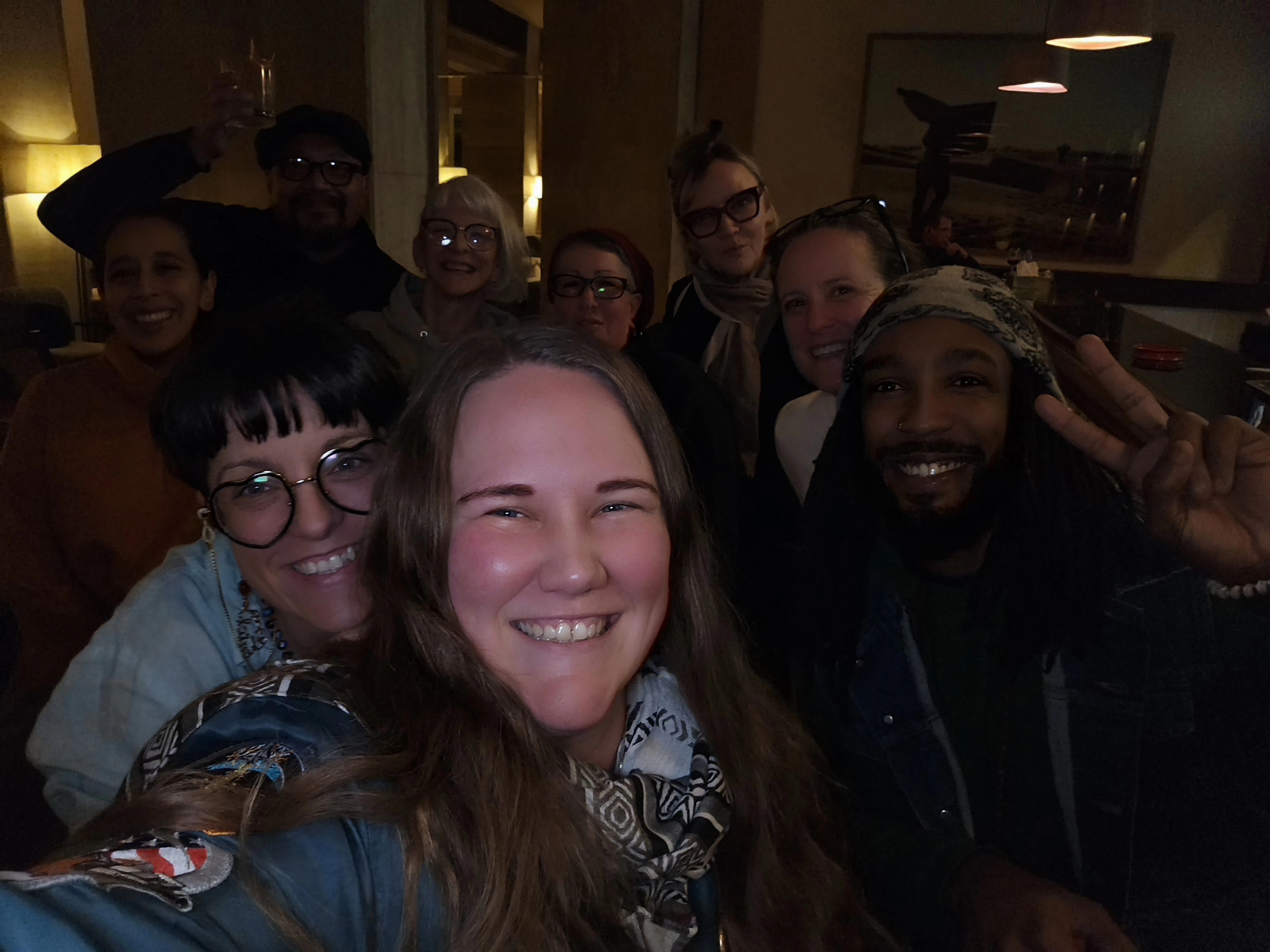
As aspiring artist-philosophers navigating the turbulence of balancing a rigorous course of study with the tension of managing a professional and personal life, it is not always easy to find people outside of IDSVA who can relate to what a student must manage to progress in this program. Therefore, having space to commune in-person with classmates to share reflections, have thoughtful conversations with, and unveil personal vulnerability is an understatement- especially when privileged to see one’s peers in a foreign country. It would be difficult to not feel joy in these moments of deep connection and mutual understanding. This type of catharsis, as Aristotle would say, leads to betterment, as there is an emotional release and a sense of clarity, which is further extended as students then share their presence in world-class museums and soulful, localized galleries.
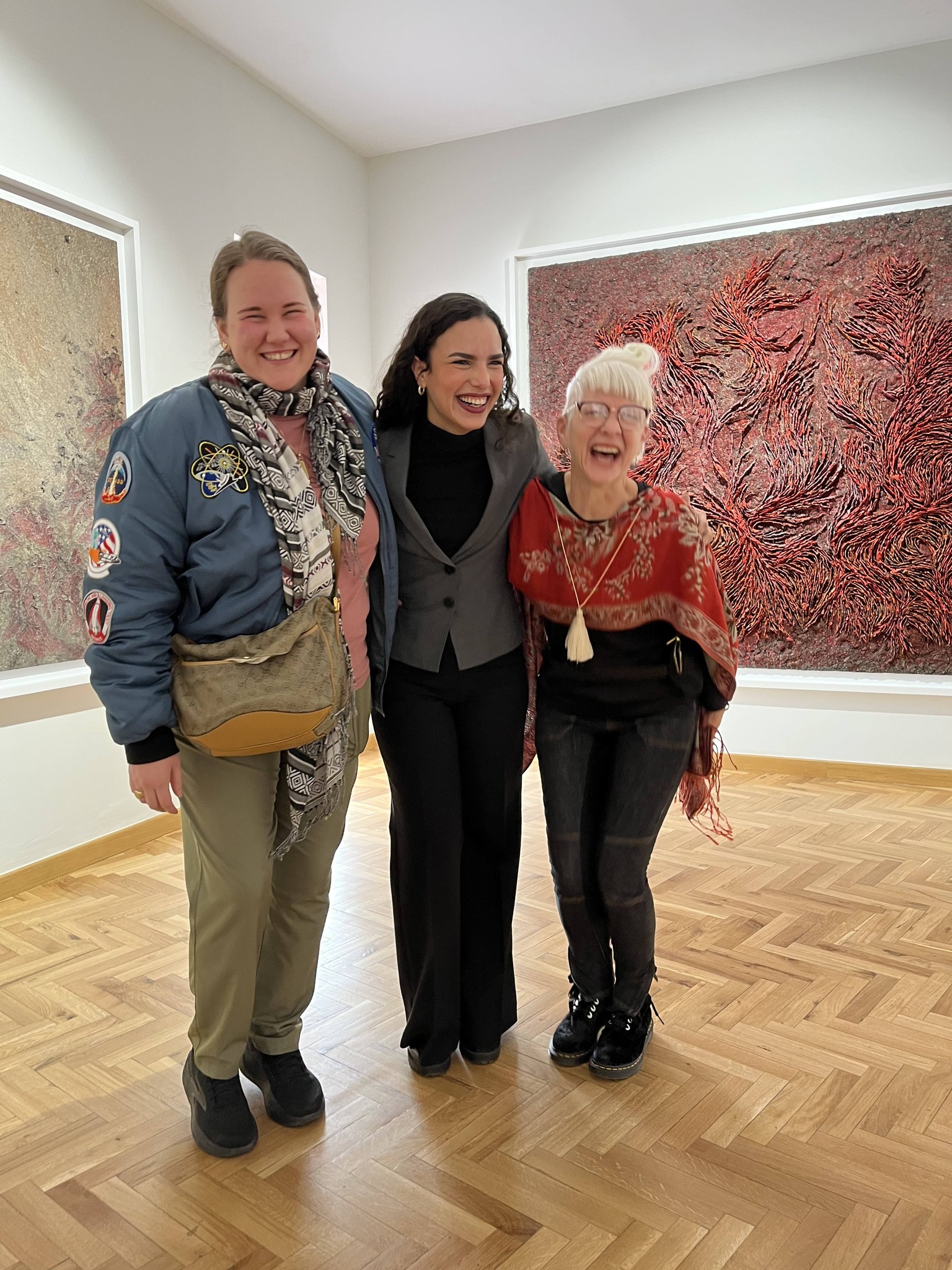
In Marrakech, our itinerary included a visit to the Comptoir des Mines Galerie. Walking in with no expectations, I was emotionally and spiritually captivated by Khadija Jayi’s installation titled, “Après le feu.” Not only is she a gifted storyteller, but I observed that her artwork centers on the philosophical concepts of self-discovery, self-overcoming, and affirmation, as she was locked away in her house for three years for wanting to pursue art. When she escaped her incarceration, the works on display were visual representations of these concepts, as she sought to articulate her journey to becoming an artist and to use her story as a platform to empower other women to pursue the fine arts. Khadija even came to the gallery to meet us and signed catalogues of her art for us, which was apparently the first time an artist’s catalogue-signing event (although a pop-up) ever occurred in the gallery. The curators and students, alongside the artist, couldn’t stop jumping in the gallery, embracing one another, and sharing happy tears of sincere gratitude.
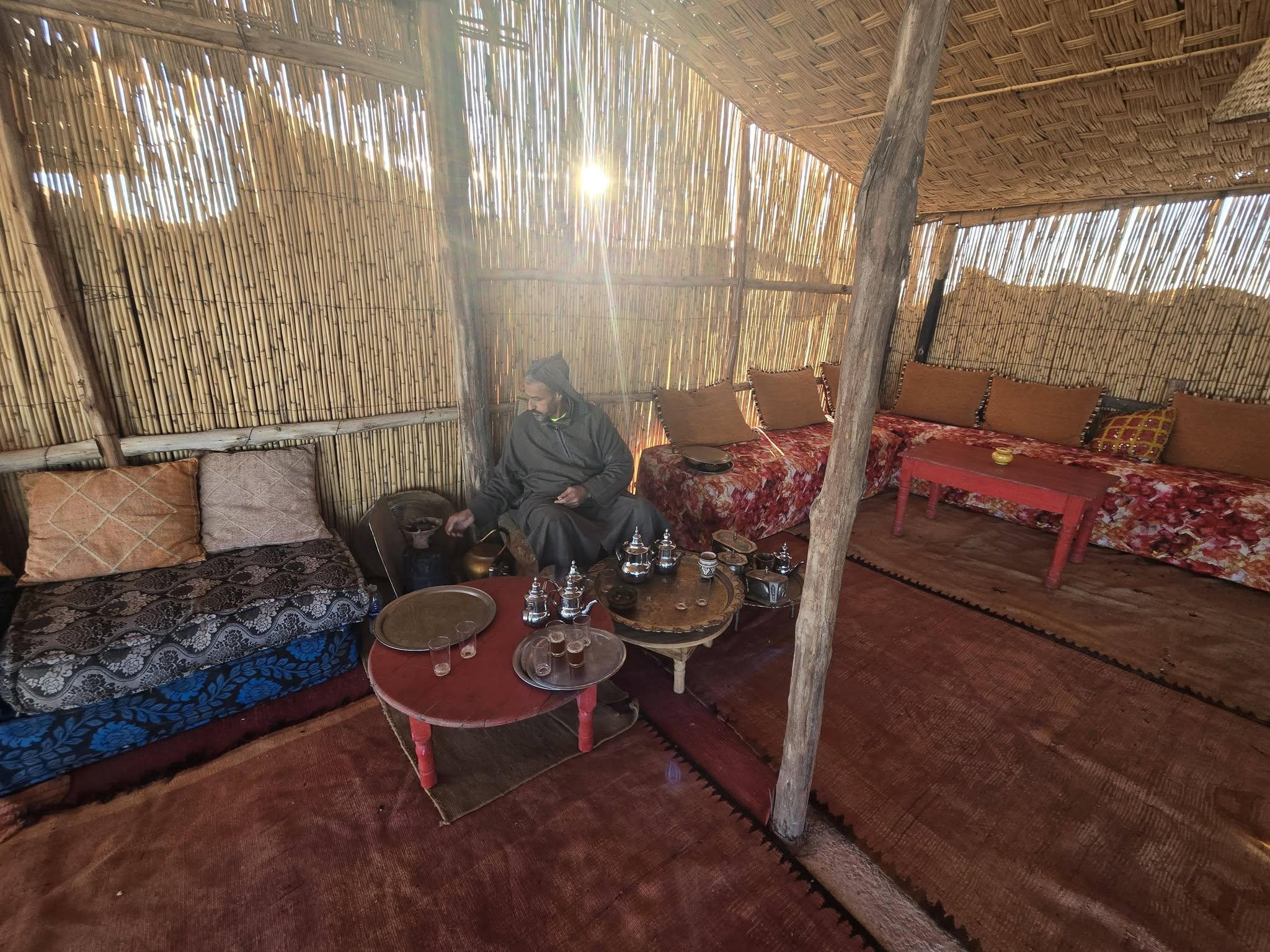
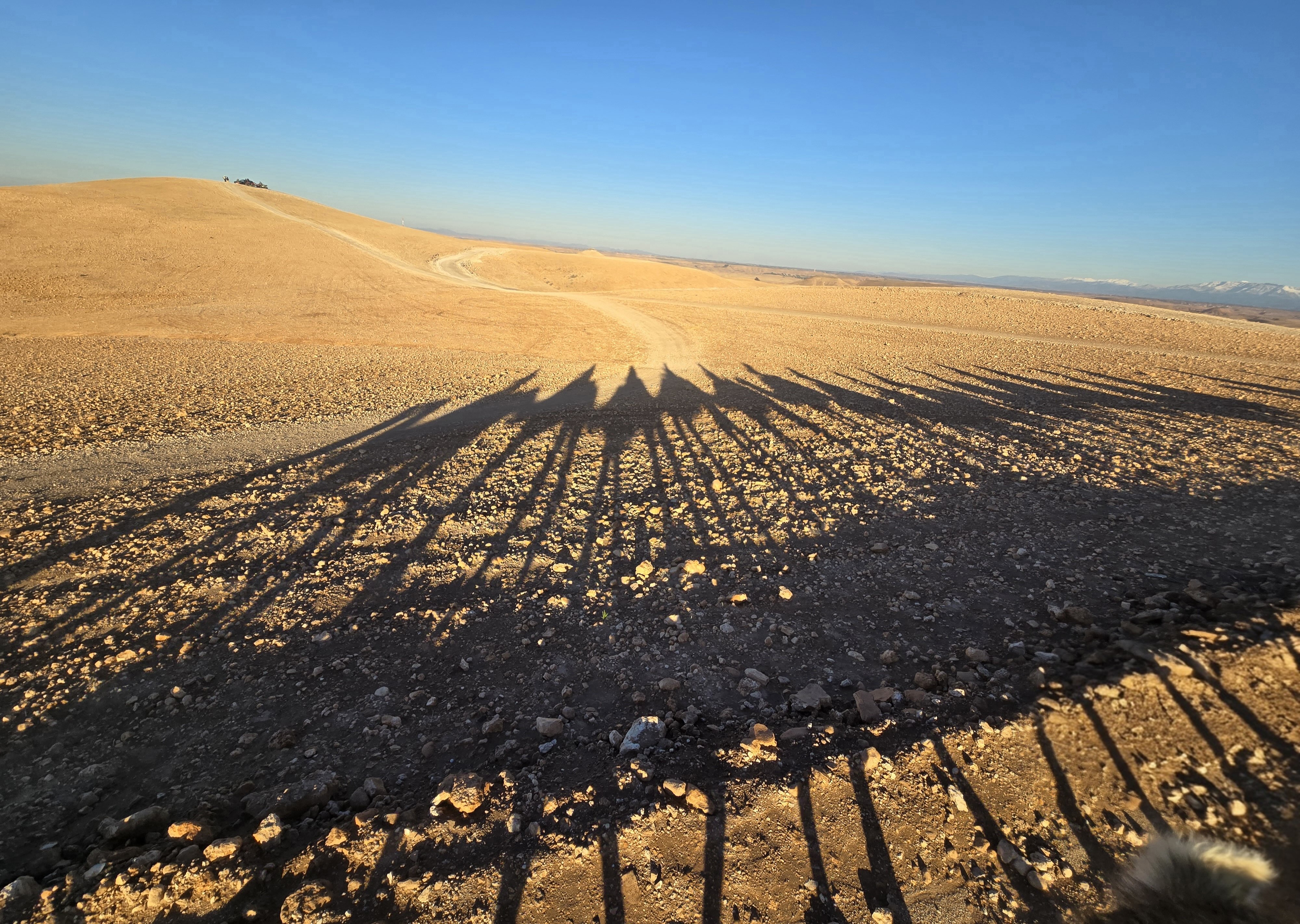
Finally, although students were given space to explore Marrakech and the surrounding area either individually or in groups, several students took advantage of similar experiences, such as getting lost in the maze-like medina, bartering, eating traditional dishes, or simply observing the harmonious blend of people, motorbikes, and animal life. Some even went to the rocky Agafay Desert to ride dromedary camels, drink tea on a summit overlooking the Atlas Mountains, and eat cultural delicacies in a Berber village.
In conclusion, IDSVA is dedicated to transforming its educational approaches by providing unique global experiences that deepen students’ learning of topological studies in art and philosophy. By stepping outside the traditional parameters of metaphysics or presenting the material as a “history of philosophy,” one transcends the limitations of conventional pedagogical approaches, such as relying solely on assigned readings or lectures. Ultimately, IDSVA empowers its students to bring their work into their lives. What better way to practice and explore theoretical concepts in “the real world” than through practical spaces, such as the residencies?
Works Cited
“Residencies: Academics.” IDSVA, www.idsva.edu/academics/residencies. Accessed 26 Jan. 2026.